
The Supreme Court has sought responses from the Centre and States regarding a plea alleging the misuse of Aadhaar cards as proof of citizenship, domicile, and residential address. The petition argues that despite legal provisions, Aadhaar is being used for purposes beyond identity verification, potentially aiding illegal immigrants, and calls for a comprehensive overhaul of electoral verification processes.
The Supreme Court is scheduled to hear on March 18 a plea seeking to debar from polls, candidates charged with serious offences. The plea, filed by advocate Ashwini Kumar Upadhyay, seeks directions to the Centre and the Election Commission of India (ECI) to restrain such candidates put on trial for serious offences. The plea alleges that despite recommendations of the Law Commission of India and court's previous directions, the Centre and the ECI did not act. The plea also highlights the increasing number of MPs with declared serious criminal cases since 2009, with one MP declaring 204 criminal cases against him, including culpable homicide, house trespass, robbery, criminal intimidation, etc. It claims that political parties are competing with each other in a race to the bottom as they couldn't afford to leave their competitors free to recruit persons with criminal antecedents.
The Supreme Court has stated that roads cannot be blocked for religious activities and that while religious denominations have autonomy in worship, the government can interfere if secular activities are affected.

The Supreme Court has directed the Election Commission to provide details regarding the 3.66 lakh voters excluded from Bihar's final electoral roll after a Special Intensive Revision (SIR) exercise. The court's direction came after concerns were raised by petitioners about the lack of notice or reasons given to the excluded voters.

Petitioner and advocate Ashwini Kumar Upadhyay submitted that a large amount of currency has reached either an individual's locker or has "been hoarded by separatists, terrorists, Maoists, drug smugglers, mining mafias and corrupt people".
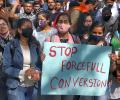
The Supreme Court on Friday sought response from the Centre and others on a plea seeking direction to take stringent steps to control fraudulent religious conversion by "intimidation" and through "gifts and monetary benefits".
The Supreme Court on Tuesday issued notice to the central government and others seeking gender-neutral, religion-neutral, uniform grounds of succession and inheritance for all citizens throughout the country.

Recently, the Madurai bench of the Madras high court has ordered that the probe into the girl suicide matter will be transferred to the CBI.
The Centre said as a matter of judicial review, the court could declare the provisions to be unconstitutional, however, the relief sought by the petitioner effectively sought to read "life-long" instead of "six years" in all sub-sections of Section 8 of the Act.

The Delhi high court on Wednesday asked the Centre and the Delhi government to present their stand on a plea seeking recall of all currency notes above Rs 100, restricting cash transactions above Rs 10,000 and linking assets worth more than Rs 50,000 with Aadhaar to check corruption.
The apex court perused the status report filed by the ministry of minority affairs which said meetings were held with the states on the issue.
The Delhi high court on Friday refused to entertain a PIL seeking direction to the Centre and the Election Commission to make voting compulsory in parliamentary and assembly polls, saying it cannot force a person to vote.
The Delhi high court on Wednesday sought the stand of the Centre and city government on a public interest litigation seeking a direction to the authorities to use the "proper meaning" of the term "religion' and not use it as a synonym of "dharma" in official documents.
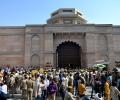
The Supreme Court of India is scheduled to hear a batch of petitions challenging the validity of certain provisions of the Places of Worship (Special Provisions) Act, 1991, which prohibits lawsuits to reclaim a place of worship or change its character from what prevailed on August 15, 1947. The pleas, including one filed by Ashwini Upadhyay, argue that these provisions violate the right to judicial remedy and create an arbitrary cut-off date. The matter will be heard in the backdrop of several ongoing cases related to places of worship, including the Gyanvapi Mosque in Varanasi and the Shahi Idgah Mosque in Mathura. The Muslim side has cited the 1991 law to argue that such suits are not maintainable. The Supreme Court had previously sought the Centre's response to Upadhyay's petition, which alleged that the law creates an "arbitrary and irrational retrospective cut-off date" for maintaining the character of places of worship.
The court had warned a "very difficult situation" will emerge if proselytisation through deception, allurement and intimidation is not stopped.

A public interest litigation was filed in the Delhi high court on Monday against permission to exchange Rs 2000 banknotes without obtaining any requisition slip and identity proof.
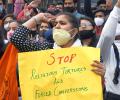
Forced religious conversion may pose a danger to national security and impinge on the religious freedom of citizens, the top court had said recently and asked the Centre to step in and make sincere efforts to tackle the "very serious" issue.
During the hearing, petitioner Upadhyay submitted that while individuals cannot seek vote in the name of religion or caste, political parties can be formed using religious connotations which cannot be permitted.
The central government has told the Delhi high court that it would examine in consultation with stakeholders the issue of formulating the Uniform Civil Code after it receives the report of the law commission.

Additional solicitor general KM Nataraj, appearing for the Centre, told a bench of Justices SK Kaul and A Amanullah that responses were still awaited from Rajasthan and Telanagana.
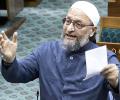
The Supreme Court on Thursday agreed to consider a plea of All India Majlis-e-Ittehadul Muslimeen (AIMIM) chief Asaduddin Owaisi seeking the implementation of the 1991 places of worship law, which asks to maintain the religious character of a place as it existed on August 15, 1947.
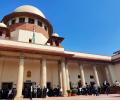
Terming forced religious conversion a "very serious" issue, the Supreme Court on Monday asked the Centre to step in and make sincere efforts to check the practice.

A bench said, "We are nobody to say what is to be taught in schools. It is none of our business. How can we direct that."
The Delhi high court on Monday dismissed a public interest litigation (PIL) challenging the RBI's decision to withdraw Rs 2,000 denomination banknotes from circulation. A bench of Chief Justice Satish Chandra Sharma and Justice Subramonium Prasad, which had reserved its order on the PIL on May 30, rejected the plea. Petitioner Rajneesh Bhaskar Gupta has contended that the Reserve Bank of India (RBI) has no power to withdraw Rs 2,000 currency notes from circulation and only the Centre could have taken a decision in this regard.

The Supreme Court on Tuesday sought the response of the National Human Rights Commission (NHRC), National Commission for Women (NCW) and the National Commission for Minorities (NCM) to pleas challenging the constitutional validity of polygamy and 'nikah halala' among Muslims.

A bench headed by Chief Justice D Y Chandrachud observed that candidates may contest elections from different seats due to a variety of reasons and it is Parliament's will as to whether the course of democracy would be furthered by granting such a choice.

The Reserve Bank of India (RBI) on Tuesday told the Delhi high court that withdrawal of Rs 2000 notes is not demonetisation but a statutory exercise, and the decision to enable their exchange was taken for operational convenience.
The Supreme Court Friday granted the 'last opportunity' to the Centre to file its reply on a public interest litigation seeking directions for framing of guidelines identifying minorities at the state level as Hindus are in a minority in 10 states and are not able to avail the benefits of schemes meant for minorities.
The Mathura Shahi Masjid Eidgah Committee has approached the Supreme Court, requesting the court to prevent the central government from filing a response to a petition challenging the Places of Worship Act's constitutional validity. The committee accuses the BJP-led government of intentionally delaying its response. The court had previously issued a notice to the government in March 2021, but the government has yet to submit its reply despite numerous opportunities. The committee argues that the government's delay is intended to obstruct those opposing the challenge to the Places of Worship Act from filing their own responses. The petition also states that the pleas challenging the law's validity are scheduled for hearing on February 17, and closing the government's right to respond would serve justice. The Supreme Court previously issued a ruling in December 2022 that stopped courts from entertaining new lawsuits or issuing interim or final orders regarding the reclaiming of religious places, particularly mosques and dargahs. The ruling halted proceedings in 18 lawsuits filed by Hindu groups seeking surveys to confirm the original religious character of 10 mosques, including the Gyanvapi Masjid in Varanasi, the Shahi Idgah Masjid in Mathura, and the Shahi Jama Masjid in Sambhal. This decision was made in response to six petitions, including one filed by lawyer Ashwini Upadhyay, challenging various provisions of the Places of Worship Act. The 1991 law prohibits the conversion of places of worship and guarantees the preservation of their existing religious character as it stood on August 15, 1947. Notably, the dispute regarding the Ram Janmabhoomi-Babri Masjid in Ayodhya was excluded from this law. There are also several cross-petitions advocating for a strict enforcement of the 1991 law to uphold communal harmony and maintain the current status of mosques that Hindu groups seek to reclaim, claiming they were temples before being destroyed by invaders.
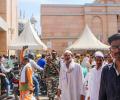
The Act prohibits conversion of any place of worship and provides for the maintenance of the religious character of any place of worship as it existed on August 15, 1947.

India will send 117 athletes to the Paris Olympics, starting July 26 in the French capital. This will be India's second-biggest contingent at an Olympic Games after 121 athletes went to Tokyo in 2021. A total of 47 female and 70 male athletes will be part of the Indian contingent at the Games.
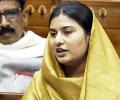
Samajwadi Party leader and Kairana MP Iqra Choudhary has moved the Supreme Court seeking effective implementation of the Places of Worship (Special Provisions) Act, 1991. This move comes amidst several petitions challenging the law's validity, including those filed by the Akhil Bhartiya Sant Samiti and lawyer Ashwini Upadhyay. The Supreme Court, in December 2022, had restrained all courts from examining fresh suits and passing interim orders in pending cases seeking to reclaim religious places. The Act aims to maintain the religious character of places of worship as they existed on August 15, 1947, but the dispute relating to Ram Janmabhoomi-Babri Masjid at Ayodhya was kept out of its purview. The court has listed Choudhary's plea with other pending pleas for February 17.

Upadhyay, in his plea, challenged the validity of section 2(f) alleging that it gives unbridled power to the Centre terming it "manifestly arbitrary, irrational, and offending".

The Centre on Tuesday told the Supreme Court that it has held consultative meetings with all state governments, Union territories and other stakeholders on the issue of identification of minorities at the state level and 14 states have furnished their views so far.
A bench comprising Chief Justice Sanjiv Khanna and Justice Sanjay Kumar also indicated that it may not take up the pending scheduled petitions, heard earlier by a three-judge bench, during the day as it was sitting in a combination of two judges.

The central government has told the Delhi High Court that citizens from different religions and denominations following different property and matrimonial laws is an affront to the nation's unity and the Uniform Civil Code will result in the integration of India.
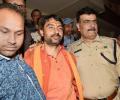
The arrest came barely a few hours after a Bhagalpur court rejected the anticipatory bail plea of Shashwat against whom an arrest warrant was issued on March 24.

The HC said it would lead to data of genuine account holders going 'unnecessarily' to foreign countries.

The petition sought directions for taking steps to promote brotherhood and national integrity in the country.
The Supreme Court on Monday said it would hear on February 3 a batch of pleas challenging controversial state laws regulating religious conversions due to interfaith marriages.
